🎠Inspiration🦄
1. John Galliano for Dior
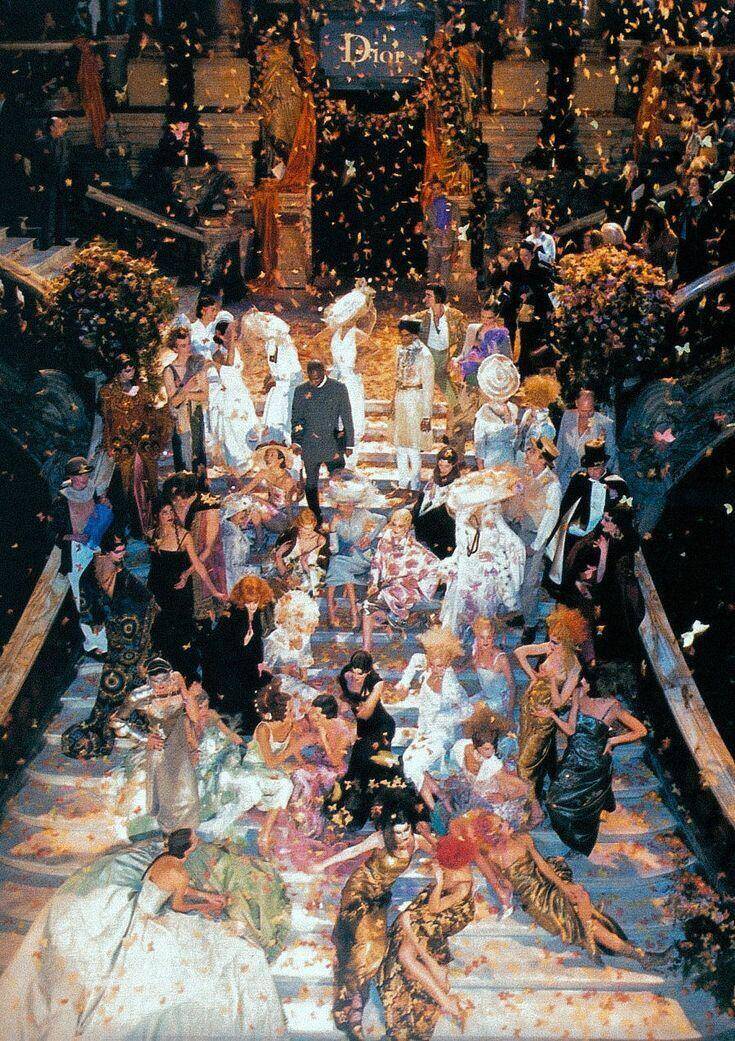
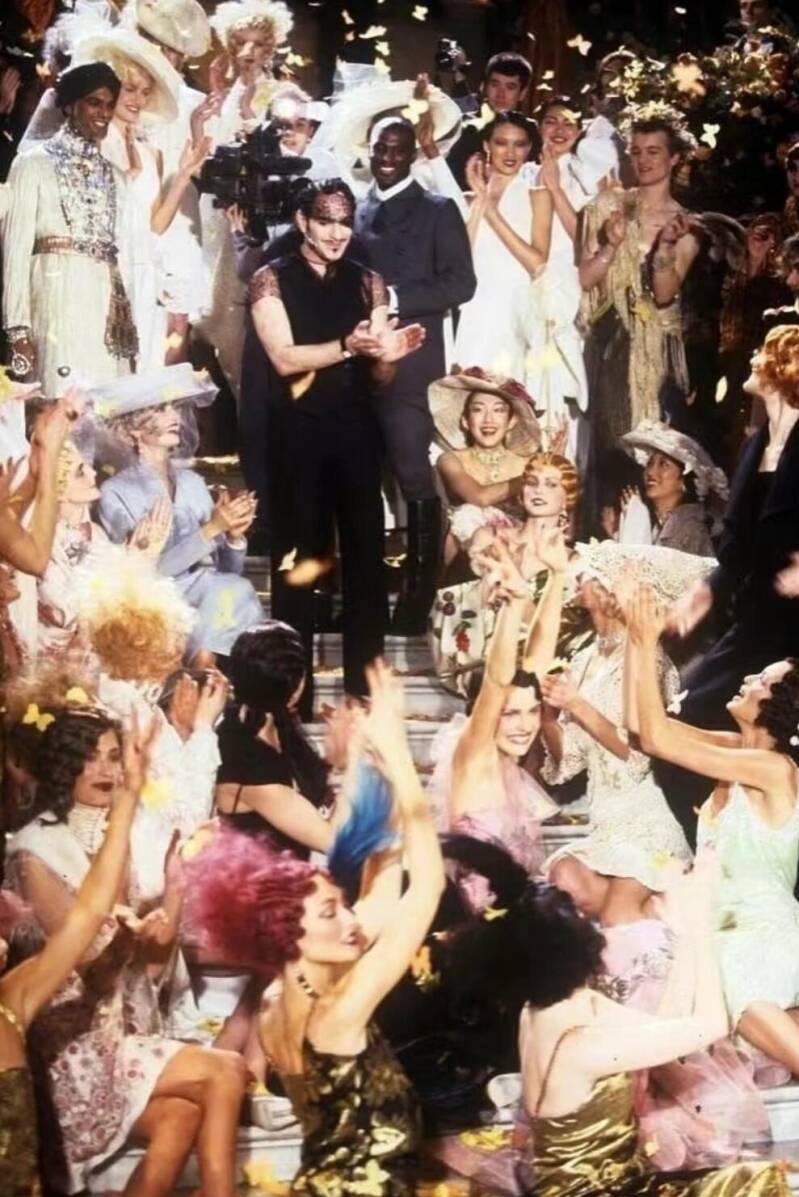
John Galliano’s Dior couture shows remain a major reference for our project because they transformed fashion presentation into total theatre. What mattered was never clothing alone, but the orchestration of costume, architecture, gesture, and crowd into a single overwhelming image. In Galliano’s 1998 couture presentation for Dior, staged on the grand marble steps of the Paris Opera, models did not simply appear one by one; they accumulated into a living tableau of decadence, fantasy, and historical excess. The show suggested that glamour could operate like dramaturgy, and that fashion could function as character, atmosphere, and spectacle all at once. This directly informed Surrealist Ball, where each performer was conceived not merely as an individual in costume, but as a fragment of a larger dream-world built through persona, group composition, and visual overload.




2. Met Gala 2019: Camp: Notes on Fashion
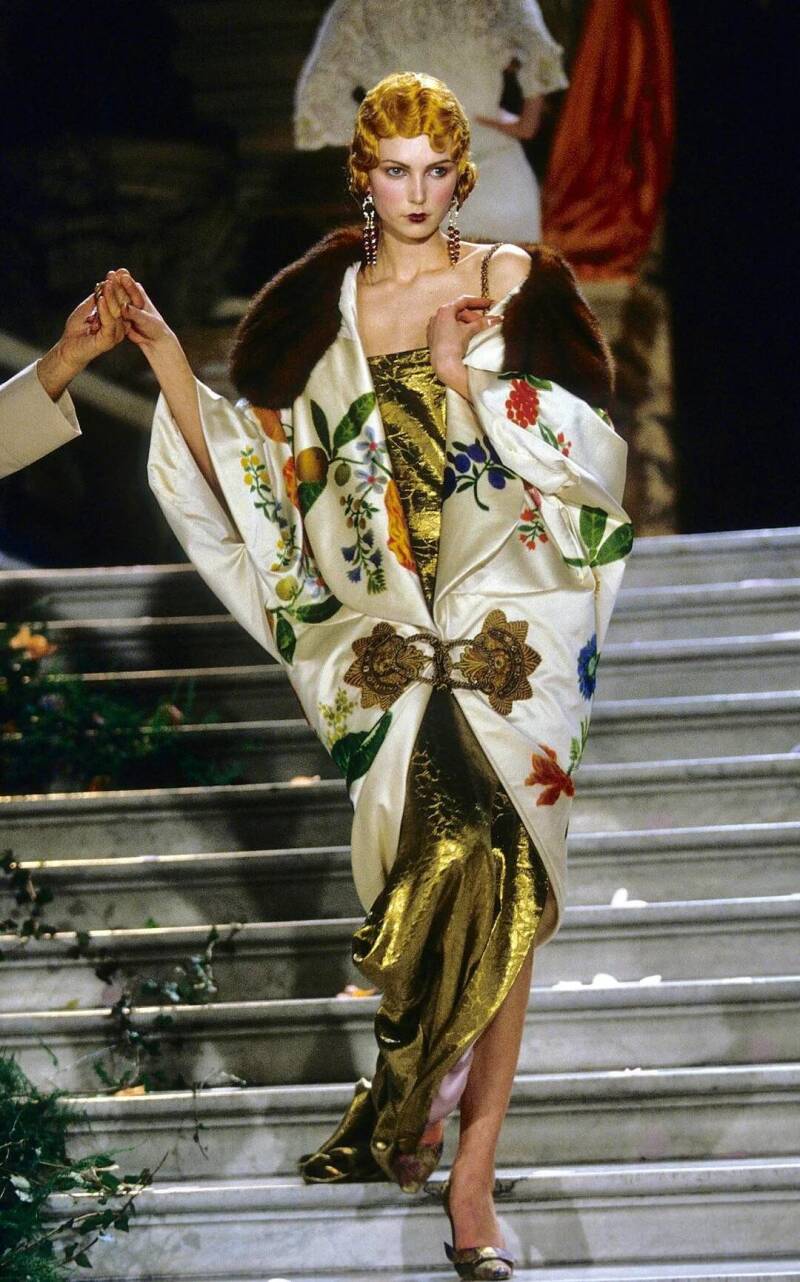
The 2019 Met Gala is important to our project not as celebrity culture, but as a concentrated study of camp as an aesthetic strategy. The exhibition framework emphasized irony, humor, parody, pastiche, artifice, theatricality, and exaggeration, all of which resonate strongly with the visual logic of Surrealist Ball. Camp does not pursue sincerity or realism; it embraces excess, performance, and the artificial construction of identity. This was especially influential for our project’s use of persona. Each performer was asked to invent a character that exceeded ordinary social identity, and camp offered a language for that transformation: stylized, overstated, self-aware, and gloriously excessive. In this sense, the Met Gala’s visual world helped us think about costume not as decoration, but as a method for producing theatrical self-invention.
Link: https://www.metmuseum.org/zh/exhibitions/listings/2019/camp-notes-on-fashion?.com
3. Rusty Lake Hotel
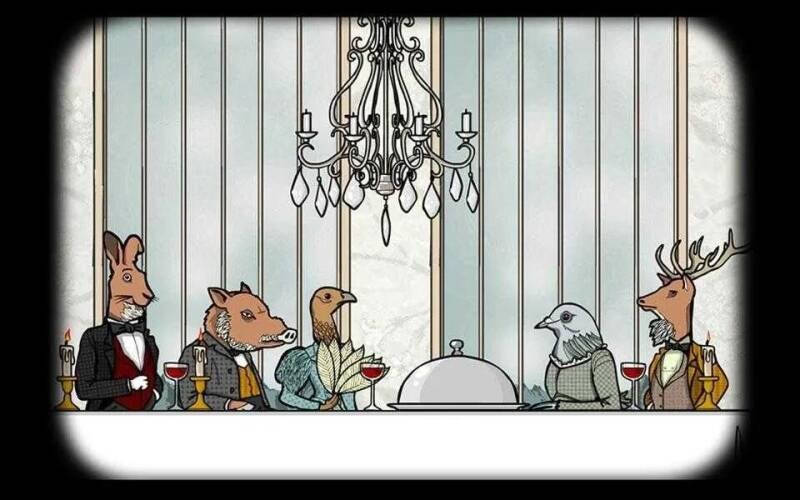
Rusty Lake Hotel became an unexpected but precise inspiration for our project because it stages surrealism through manners, ritual, and grotesque character design. Its animal-headed guests, elegant dining settings, and quiet atmosphere create a world that feels both civilized and deeply disturbing. The game’s official framing of Rusty Lake as an eerie and surrealistic world, together with its premise of serving deadly dinners to five animal-headed guests, captures something central to our own artistic interests: the collision of beauty, absurdity, ritual, and latent violence. What draws us most is the way the characters remain poised and stylized even as the world around them becomes increasingly irrational. This balance between etiquette and nightmare helped shape our thinking around persona design, especially the idea that a character can be theatrical, grotesque, and strangely elegant at the same time.
Link: https://www.rustylake.com/adventure-games/rusty-lake-hotel.html?.com


4. Surrealist visual lexicon
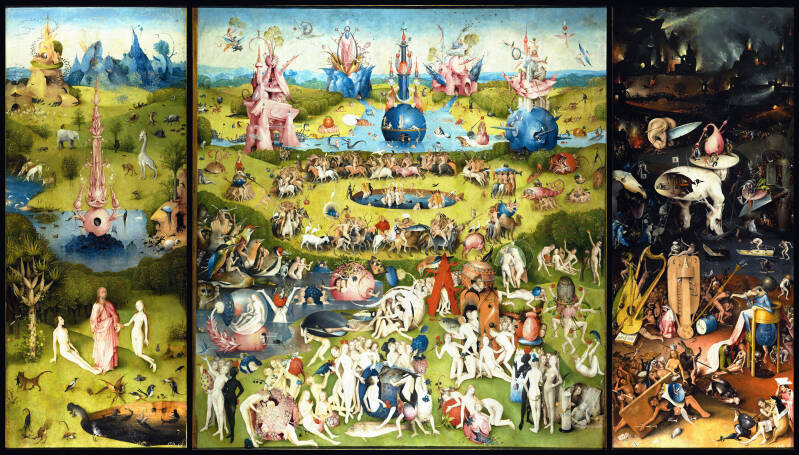
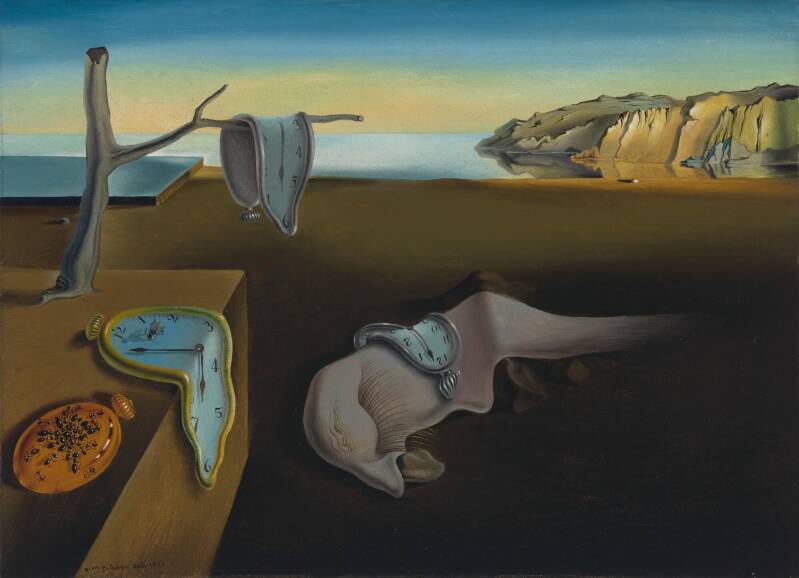
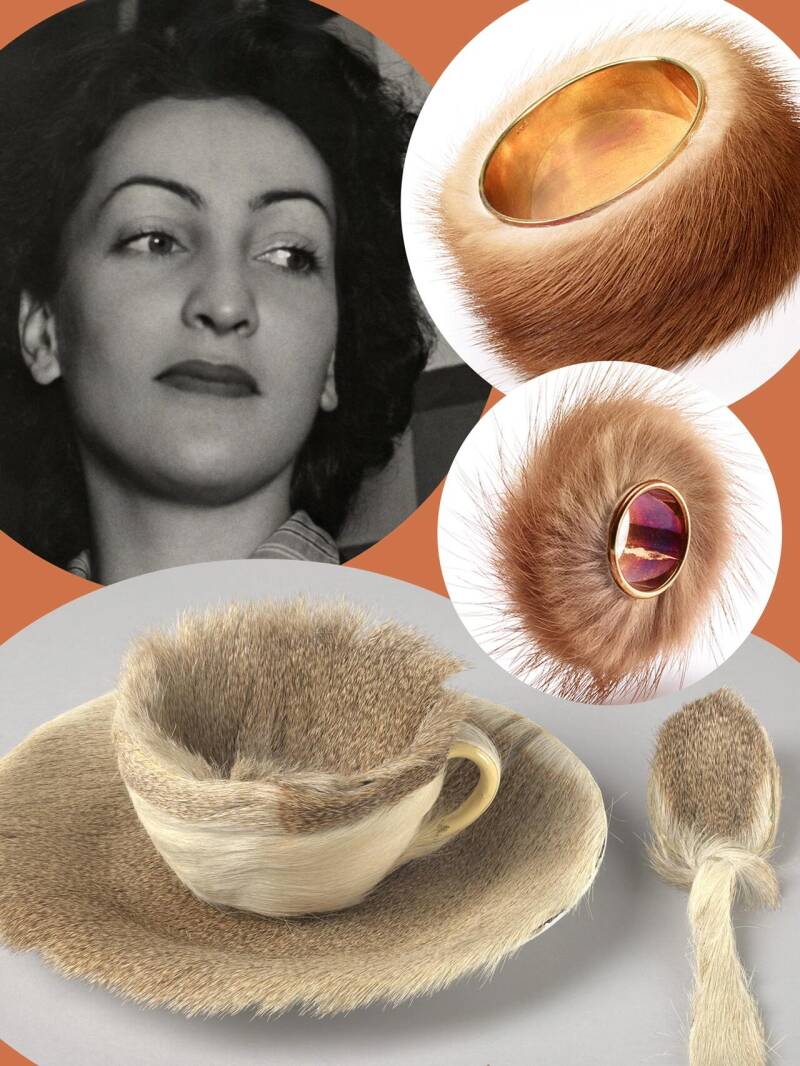
Some of our inspirations come from the most iconic and immediately recognizable images of surrealism itself: the apple-faced man, melting time, Edenic excess, and fur-covered tableware. These works matter to us not because they are obscure, but because they provide the clearest possible demonstration of surrealism’s core operation: making the familiar unstable. In these images, identity is concealed, time becomes soft and unreliable, paradise becomes crowded with desire and disorder, and domestic objects turn tactile, uncanny, and faintly repulsive. Together they form a foundational vocabulary for our project. They remind us that surrealism often works most effectively when it does not invent an entirely alien world, but instead disturbs what we think we already know.
link: https://www.moma.org/collection/works/80997?.com

5. Human platter / Nyotaimori
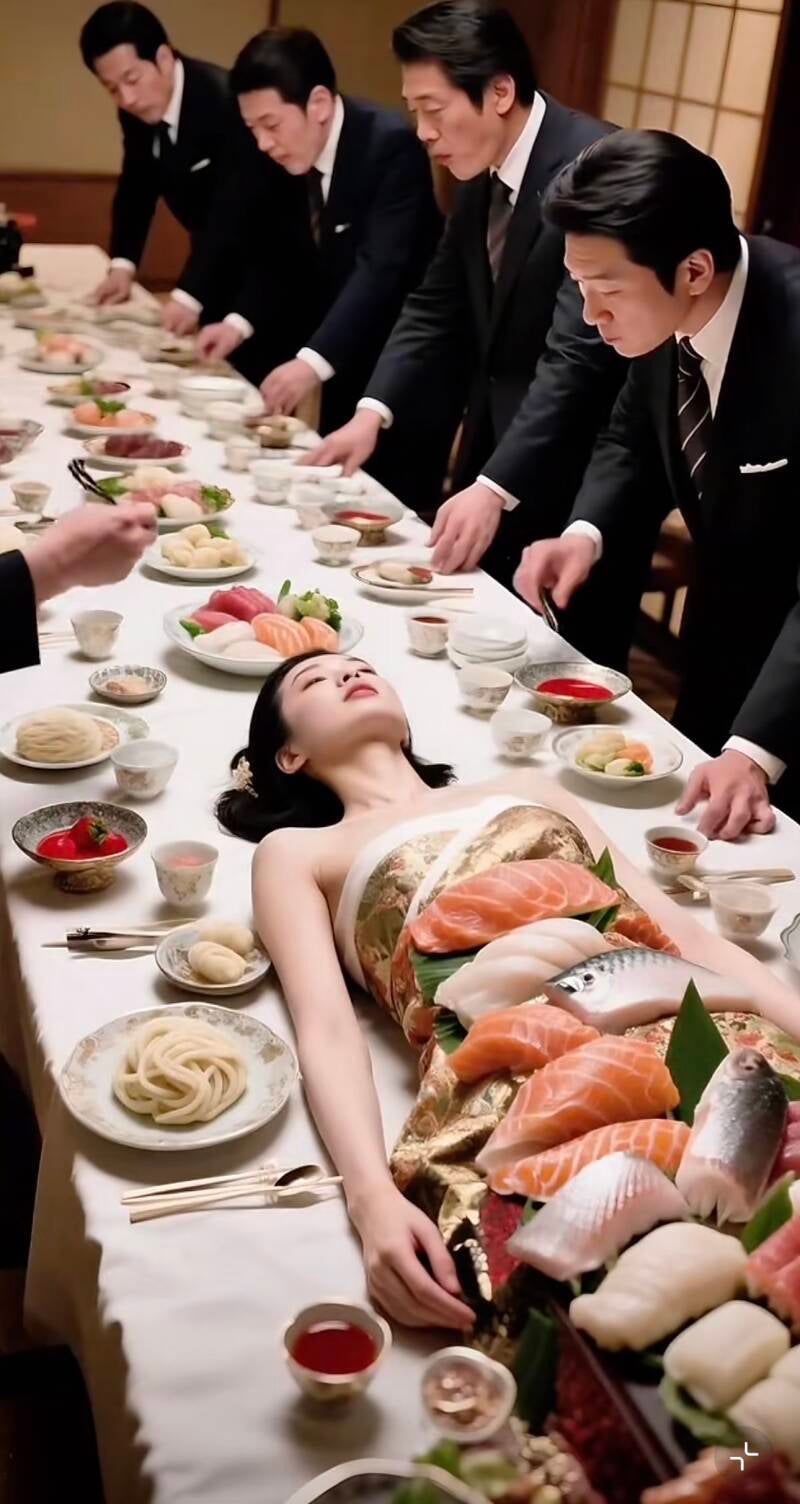
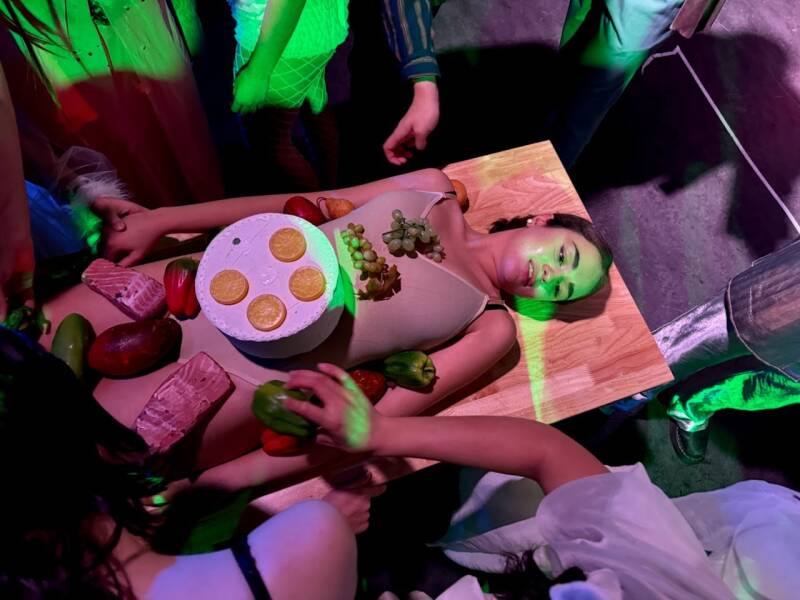
Another key inspiration is the image of the human body transformed into a banquet surface. What interests us here is not exoticism for its own sake, but the disturbing collapse of categories: body becomes table, intimacy becomes display, and eating becomes inseparable from desire, power, and objectification. This visual language is deeply relevant to Surrealist Ball because it exposes the banquet not as a neutral social ritual, but as a space where gluttony, lust, spectacle, and domination become visible at once. The human platter image feels excessive, theatrical, and morally unstable, which is precisely why it belongs within a surrealist framework. It makes appetite visible as performance. In our own work, this inspiration helped us think about how bodies can be staged as offerings, altars, or objects of consumption within a larger ecstatic and unsettling environment.

Fuerza Bruta
One of the strongest references for this project comes from a performance image remembered from childhood: spectators standing beneath a vast transparent membrane filled with water, looking upward as performers moved, danced, and pressed against the liquid surface above them. Based on the visual details of that memory, the closest and most likely reference is the Argentine performance company Fuerza Bruta. Official materials describe the company’s work as a global storm of movement, music, and raw emotion that breaks conventional limits, Multiple production images and regional promotional materials also show the exact overhead transparent pool sequence in which performers dance above the audience in water. What makes this image so important for us is that it completely reorganizes spectatorship: the audience no longer watches safely from the front, but stands inside a vertical field of tension, wonder, and sensory instability.
link: https://fuerzabrutaglobal.com/?.com
7. Studio 54
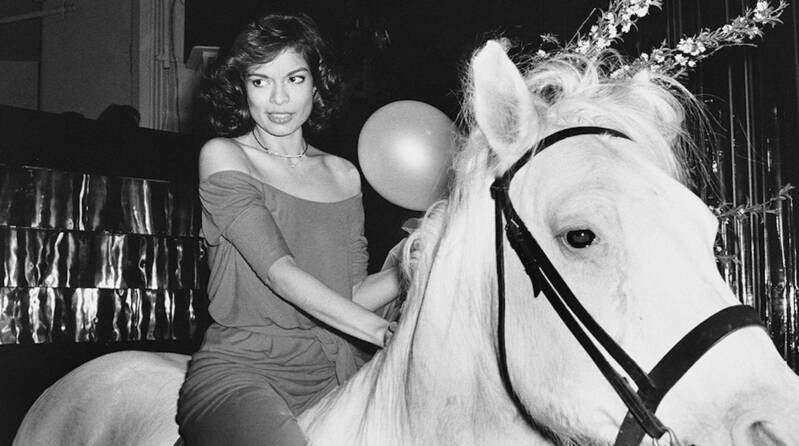
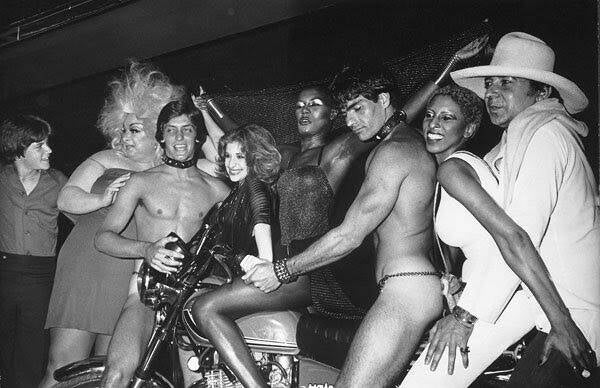
Studio 54 inspired our project not simply as a nightclub, but as a model of nightlife turned into social theatre. Its mythology was built through glamour, expressive freedom, sexual liberation, music, fashion, and the sense that anyone entering the space became part of a live spectacle. This is what matters most to Surrealist Ball: the idea that a party can function dramaturgically, and that spectatorship can emerge through dressing, dancing, arriving, posing, and being seen. Studio 54 was not only a location for excess; it was a machine for producing myth through people, costume, and atmosphere. That logic deeply informed our own event. We wanted the ballroom to feel less like a venue hosting performances and more like a temporary world already in motion, where everyone present, whether performer or audience member, was caught inside the same ecstatic social dream.
link: https://ago.ca/exhibitions/studio-54-night-magic?.com
8. Sleep No More
Sleep No More is one of the clearest structural inspirations behind our project because it redefines theatre as an explorable environment rather than a fixed frontal event. Official descriptions emphasize its darkly cinematic retelling of Macbeth, built through acrobatic choreography, a film noir soundtrack, and countless densely detailed rooms through which each guest creates a unique journey. This immersive logic strongly shaped our understanding of environmental performance. What mattered to us was not narrative imitation, but the spatial principle behind it: that atmosphere, architecture, movement, and proximity can generate meaning as powerfully as dialogue or plot. The show’s masked audience, silent roaming, and invitation to investigate rooms, drawers, notes, and hidden encounters offer a model of spectatorship based on curiosity, secrecy, and disorientation. That approach helped us imagine Surrealist Ball not simply as a themed event, but as a world that the audience must enter, decode, and physically inhabit.
link: https://mckittrickhotel.com/events/sleep-no-more/?.com

9. Marchesa Casati
A further conceptual reference is Marchesa Luisa Casati, whose life blurred the boundaries between aristocratic self-fashioning, performance art, and living spectacle. She did not simply wear extravagant clothing; she staged herself as an artwork. This idea is especially meaningful for Surrealist Ball, where performers were asked to construct personae that exceeded everyday identity. Casati offers a powerful precedent for the body as theatrical surface and the self as deliberate fabrication. Her importance also connects back to Galliano, whose 1998 Dior couture show drew explicitly on her image and aura. In that sense, Casati stands as a bridge between historical decadence and contemporary performance persona.
link: https://www.vogue.com/fashion-shows/spring-1998-couture/christian-dior?.com
