Inspiration intro
This project draws inspiration from works that transform ordinary public and commercial spaces into uncanny stages. We were especially interested in masked identity, collective mimicry, consumer ritual, and the strange tension between everyday environments and theatrical behavior.
1. The Swedish Play — Radix Theatre
Radix Theatre’s The Swedish Play is one of the clearest inspirations for our project because it transformed IKEA itself into a performance environment. Rather than treating the store as a neutral backdrop, the work turned shopping routes, display rooms, and acts of spectatorship into dramaturgical material. This was especially relevant to our process in IKEA, where the showroom became a living score: bodies appeared frozen inside domestic scenes, then slowly gathered, followed, imitated, and absorbed one another as the audience moved through the space.
Radix describes The Swedish Play as a work in which audiences roamed IKEA Richmond as shoppers while listening on headphones, making it an unusually direct precedent for your own site-responsive use of IKEA as a theatrical architecture.
Link:
https://vimeo.com/30810995

2. Gillian Wearing — masks / unstable identity
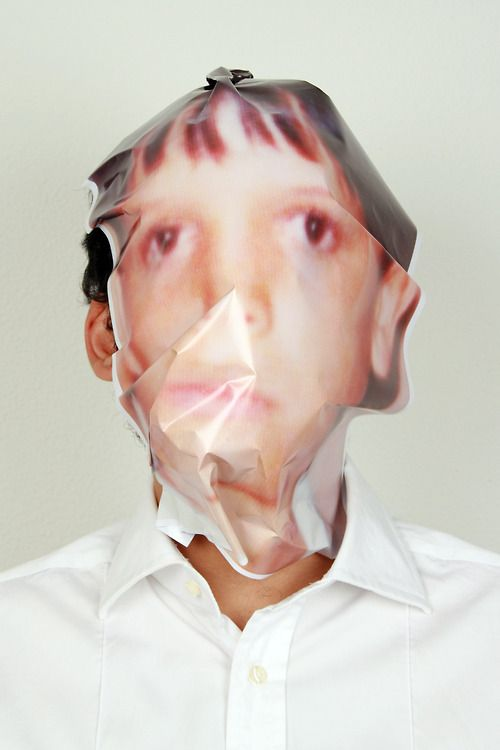
Gillian Wearing’s practice was a major inspiration for our use of AI-generated face masks. Her work treats identity not as something fixed, but as something worn, duplicated, staged, and estranged. That logic is very close to our own masked bodies in IKEA: the face remains visible, yet the performer feels absent; the body is present, but the self seems displaced. In our performance, the masks created an uncanny sameness that made the group look both collective and empty, as if each body were carrying an image of a person rather than a stable personhood.
The Guggenheim describes Wearing, Gillian as a synthesis of her exploration of “the masquerade of identity and selfhood,” involving “masks worn over masks,” while actors’ faces, bodies, and voices are digitally morphed into hybrid deepfake versions of the artist. The museum also notes that Wearing repeatedly recreates earlier selves by donning masks of herself at a younger age. That connection is especially strong for your project because your masks are also image-based, artificial, and slightly detached from the living body beneath them.


3. Charlie Chaplin — Modern Times
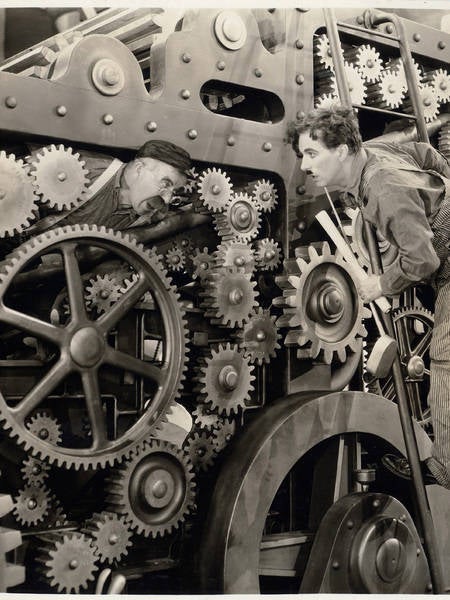
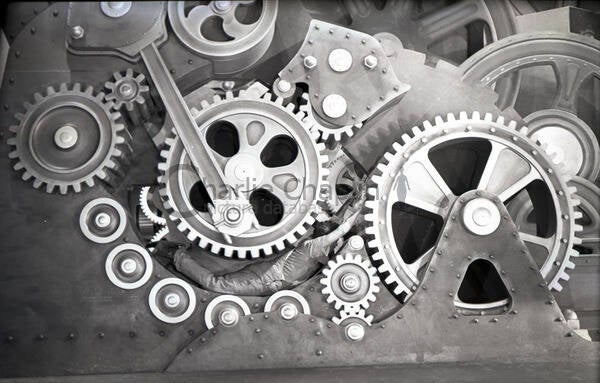
Modern Times inspired the mechanical rhythm of our group performance, especially the moment when performers join the collective through machine-like movement, and the ice-cream sequence that resembles a comic production line. We were interested in how hunger, labor, obedience, and absurd repetition could all exist in the same gesture. Our recurring action of rubbing the stomach, standing in line, and moving with an almost robotic delay turns consumption into choreography. In that sense, the body becomes less expressive and more programmed.
Chaplin’s official film text describes Charlie as “a minor cog in the grinding wheels of industry,” mechanically tightening bolts on a moving belt, while the film as a whole offers a critical look at modern productivity and industrialization. That language maps closely onto your performance’s factory-robot feeling and the strange assembly-line logic of the group’s final ice-cream ritual.
link:https://www.charliechaplin.com/en/films/6-modern-times
4. Jacques Tati — PlayTime
Jacques Tati’s PlayTime offers a powerful model for understanding how architecture choreographs behavior. What interests us here is not simply comedy, but the way polished modern environments produce awkwardness, repetition, detours, and accidental collective movement. This resonates deeply with our performance in IKEA, where escalators, corridors, bedrooms, closets, and display zones all functioned as active partners in the score. The space did not just contain the action; it organized it.
Criterion describes PlayTime as a series of encounters between people and things, unfolding across an airport terminal, office lobby, ideal home exhibition, apartment complex, and restaurant, all of which form a “continuous delirium of design.” Criterion also notes that the film turns work into play and often lets action happen on the periphery before it dissolves into joyful anarchy. That is extremely close to your dramaturgy of scattered tableaux, contagious imitation, accumulation, and dispersal across IKEA’s staged domestic architecture.
link: https://www.criterion.com/current/posts/115-playtime?srsltid=AfmBOortIwt6-UOte7U2GjXHmpOJ7zxBij954QzXThl_XK33mn-XVNIk


5. Minions — collective stupidity, loyalty, and swarm logic
The Minions film became a pop-cultural inspiration for the group logic of our performance. What interested us was not only their comic energy, but the structure of collective obedience that defines them: one figure leads, the others follow, copy, trail behind, and turn chaos into a shared rhythm. That dynamic strongly echoes our own score, where EZ leads the route, the others are gradually collected, gestures spread from one body to another, and the whole group begins to function like a strange, semi-synchronized organism. The result is funny, but also slightly menacing.
Illumination’s official synopsis explains that the Minions have spent hundreds of years searching for a master, and that without someone to serve they fall into deep depression; Kevin then sets out, joined by Stuart and Bob, to find a new boss. That leader-following, henchman-like logic is exactly why this reference works for your piece. It helps frame your performers not as psychologically individualized characters, but as a mobile collective bound by imitation, loyalty, appetite, and absurd ritual.
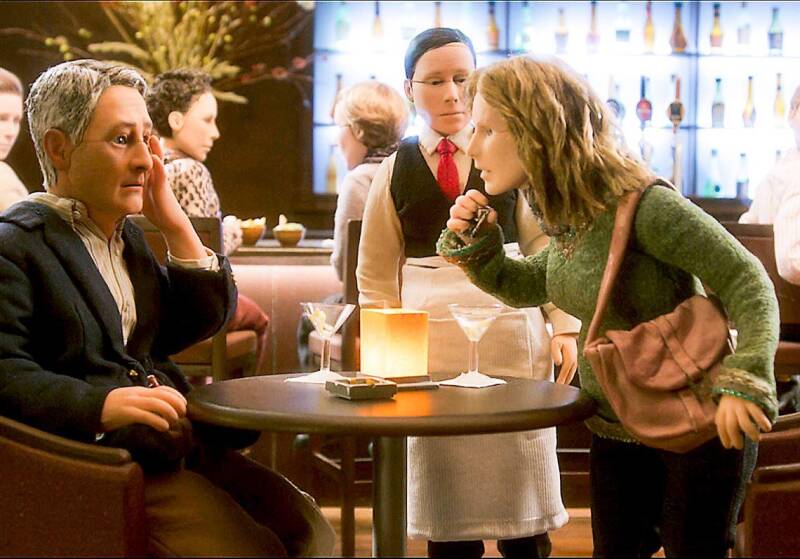
6. Anomalisa (2015)
Anomalisa is a key inspiration for our project because it imagines a world in which individuality collapses into sameness. In the film, nearly everyone is perceived as having the same face and voice, creating an uncanny social atmosphere in which personhood feels flattened, repeated, and estranged. This strongly resonates with our use of AI-generated face masks in IKEA, where performers appeared as if they were sharing one collective identity rather than expressing separate selves. The film helped us think about how repetition, commercial environments, and social choreography can dissolve individuality and turn the human face into a shared surface.
link: https://en.wikipedia.org/wiki/Anomalisa?.com